

Stainless Steel Removable Bolts
Description & Tech Specs
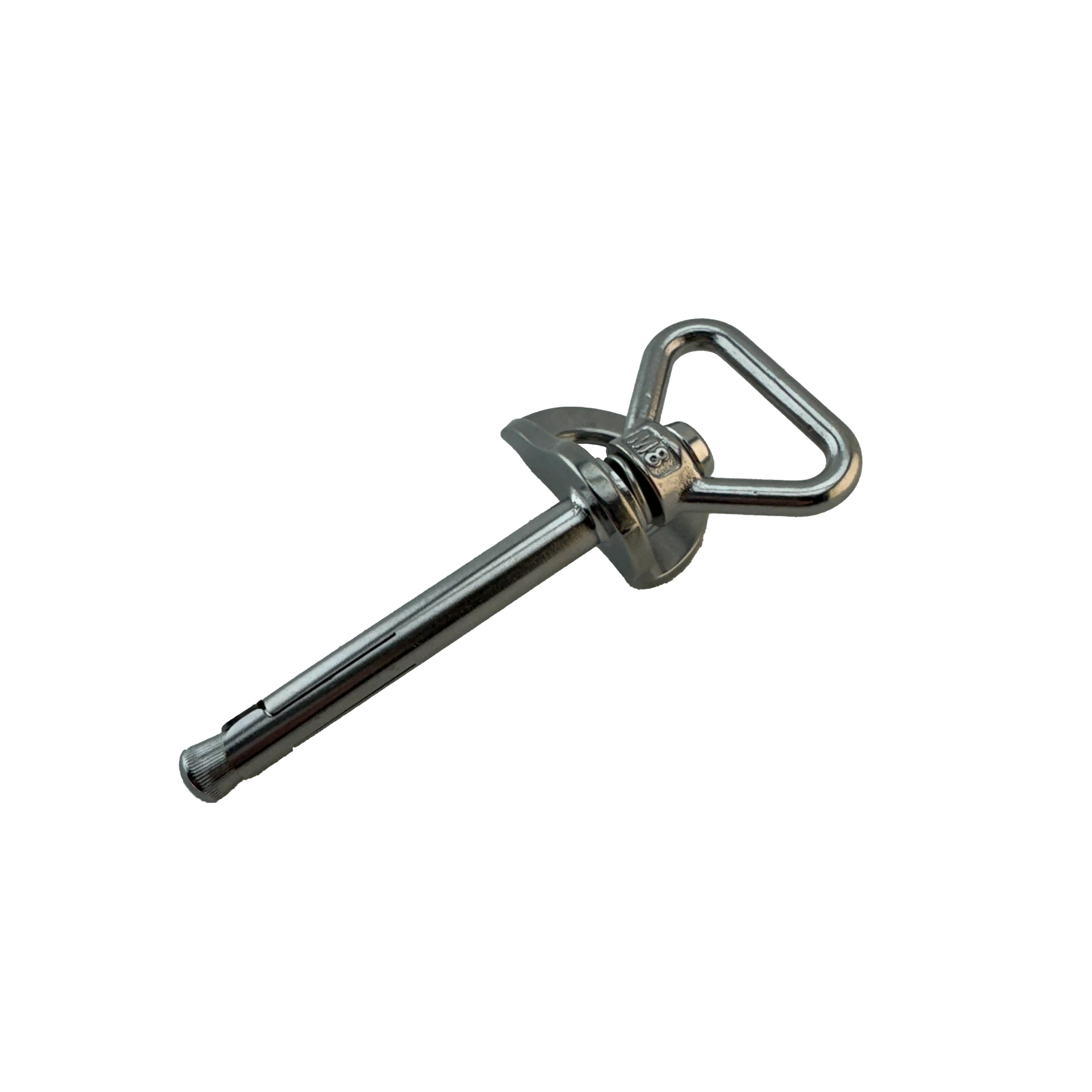
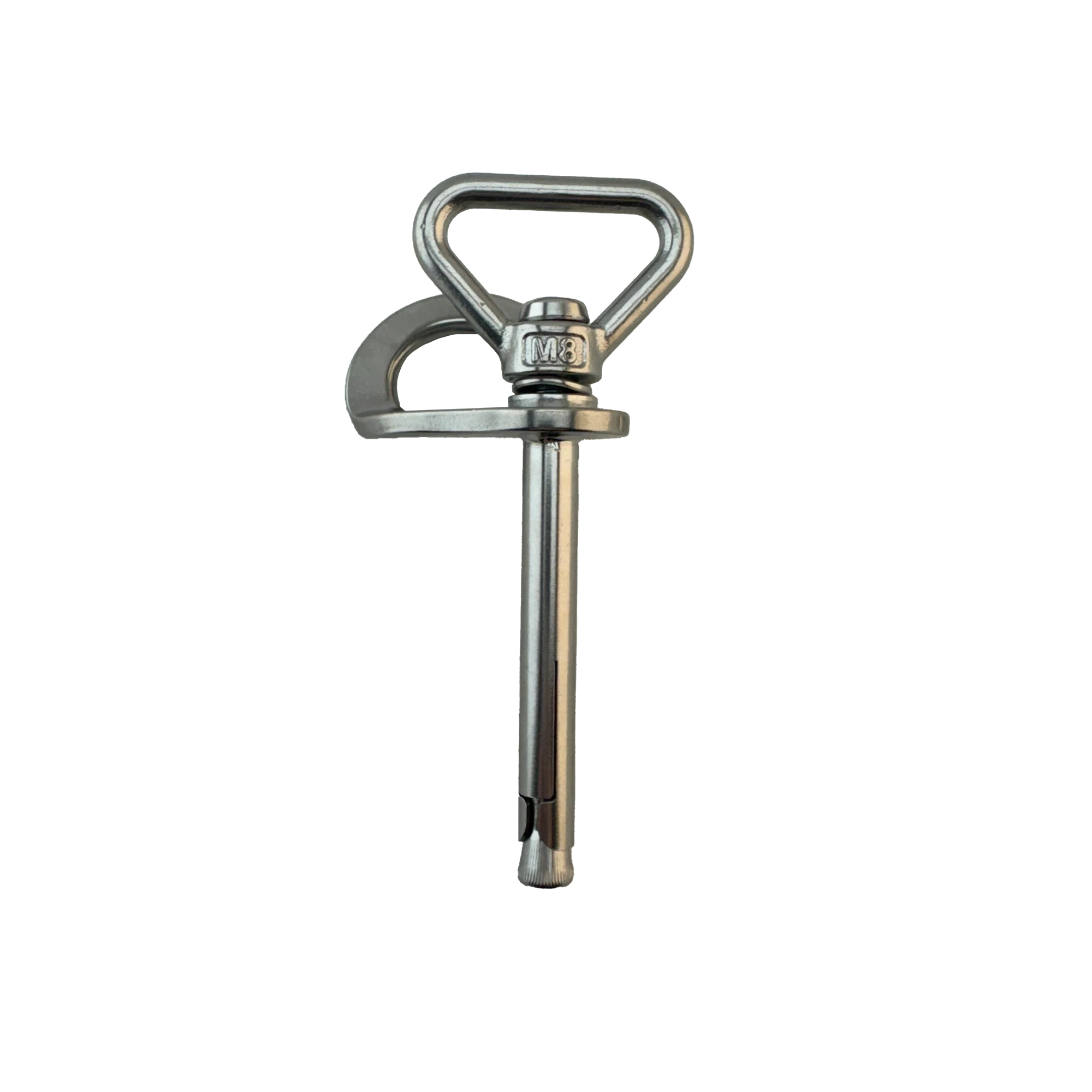
These stainless steel removable bolts are becoming a very popular choice due to their more simplistic design, all the same material, and one-piece construction.
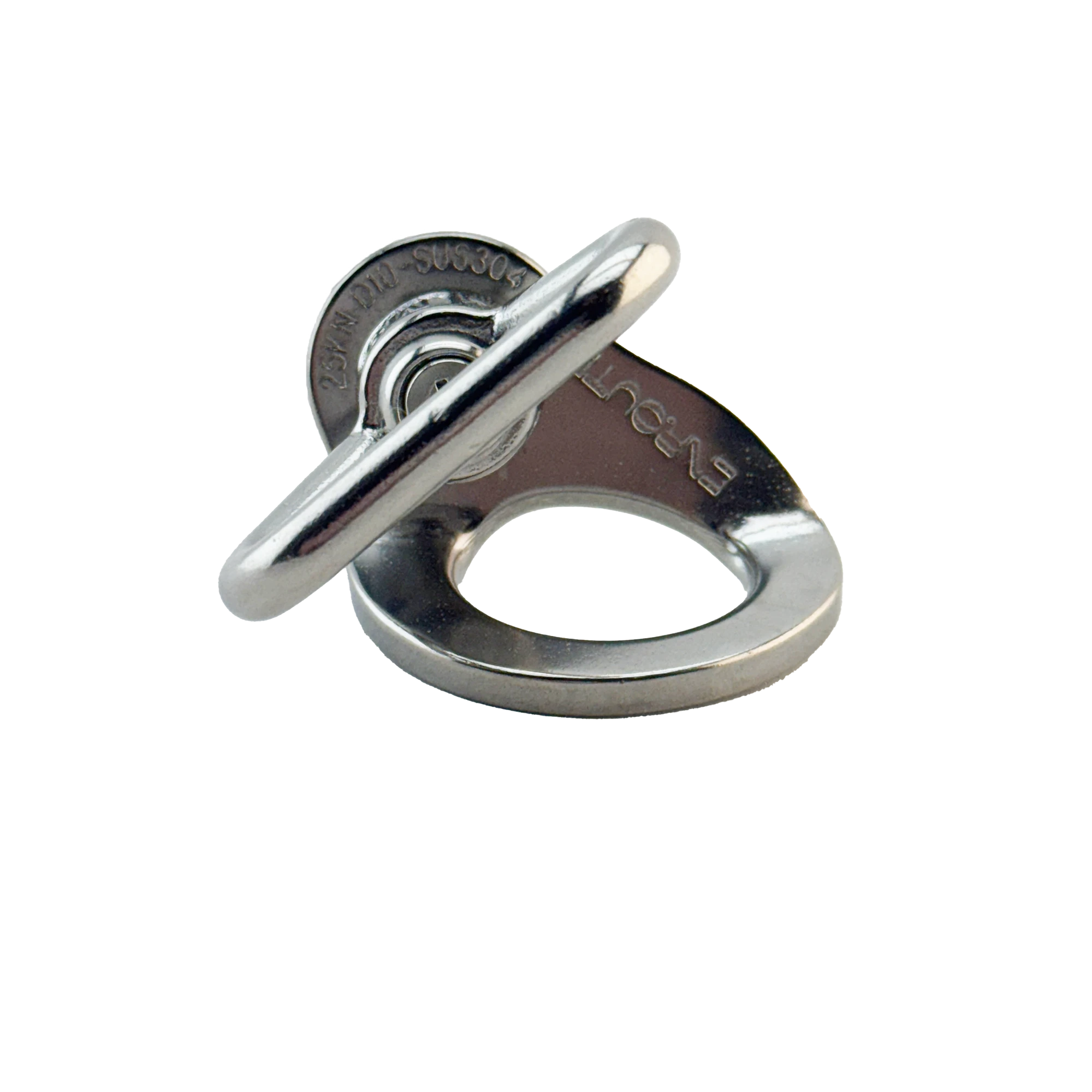
The threaded shaft is made of 2205 Duplex stainless steel which is harder and more wear-resistant. The rest of the components like the hanger, sleeve, eye nut, & washers are all 304 stainless steel. The hanger is welded onto the sleeve.
Installation Notes:
- For primary anchor installations, use multiple points for redundancy.
- Use the appropriate diameter 4-cutter SDS drill bit.
- Blow and brush your holes clean before installing the bolt.
- Orientate the hanger in the direction of the expected load.
- To tighten the bolt, rotate the ring nut by hand; the spring washer will compress.
- For removal: First loosen the ring nut (but don't unscrew it so much where it butts tightly against the cap). Second, give the delta nut a tap (as this will push the cone out of the sleeve). Then wiggle the bolt out by the hanger.
These removable bolts are meant for professionals that are able to discern the substrate is appropriate quality and hardness for sleeve anchors of a 10mm*80mm size. And are able to appropriately install & and inspect the installation.
If you run into trouble reinstalling because the ring nut is just spinning around, watch the attached video about cause and prevention. Basically, you want to mindfully loosen the bolt so the ring nut doesn't bind against the end cap.
You can watch Climbing Taiwan's break tests in full HERE. Results in shear were 38.58 kN (pull-out failure), in tension 23.99 kN ( pull-out failure). The delta ring nut broke in tension at 16.6 kN.
And here's a really cool review from a caver/mechanical engineer HERE. The accompanying article is HERE.
The threaded end cap has Loctite on it. With some vice grips on the knurled shaft end and another pair on the cap, the thread locker seal can be broken. Then they can also be disassembled to switch out parts for cleaning or repair. (Though we only recommend this for tool-savvy individuals that are fully cognizant of what they're doing and the implications.)